Most bad home coffee comes down to five fixable things, and none of them needs an expensive machine. Get these right and a basic pour-over or French press will beat most high street cups.
1. Buy good beans and use them fresh
Coffee loses flavour quickly after roasting. Aim to use beans within about two weeks of the roast date, and within a week of opening the bag. Store them in an airtight container on the counter. The fridge and freezer are a mistake: cold air breaks down the structure of the bean, and beans soak up the smell of whatever sits beside them.
2. Grind just before you brew, with a burr grinder
A burr grinder crushes beans to an even size. A blade grinder chops unevenly, so some grounds over-extract and turn bitter while others under-extract and taste sour, all in the same cup. Ground coffee also stales within minutes because so much more of it is exposed to air, so grind right before brewing.
3. Match the grind to the method
The rule of thumb is that the finer the filter, the finer the grind. Espresso is the finest, French press the coarsest, and pour-over and drip sit in between. If your coffee tastes sour, go a little finer; if it tastes bitter, go a little coarser.
4. Use filtered water at the right temperature
Aim for roughly 92–96°C (198–205°F). Water that is too hot brings out bitterness, and water that is too cool tastes flat or sour. A simple carbon filter jug is usually enough to sort out the water, and it is worth doing because a cup of coffee is mostly water.
5. Keep your equipment clean
Oil and mineral build-up in grinders, brewers and French presses changes how coffee tastes and shortens the life of the kit. Rinse after every use and give everything a proper clean regularly.
Two easy methods to start with
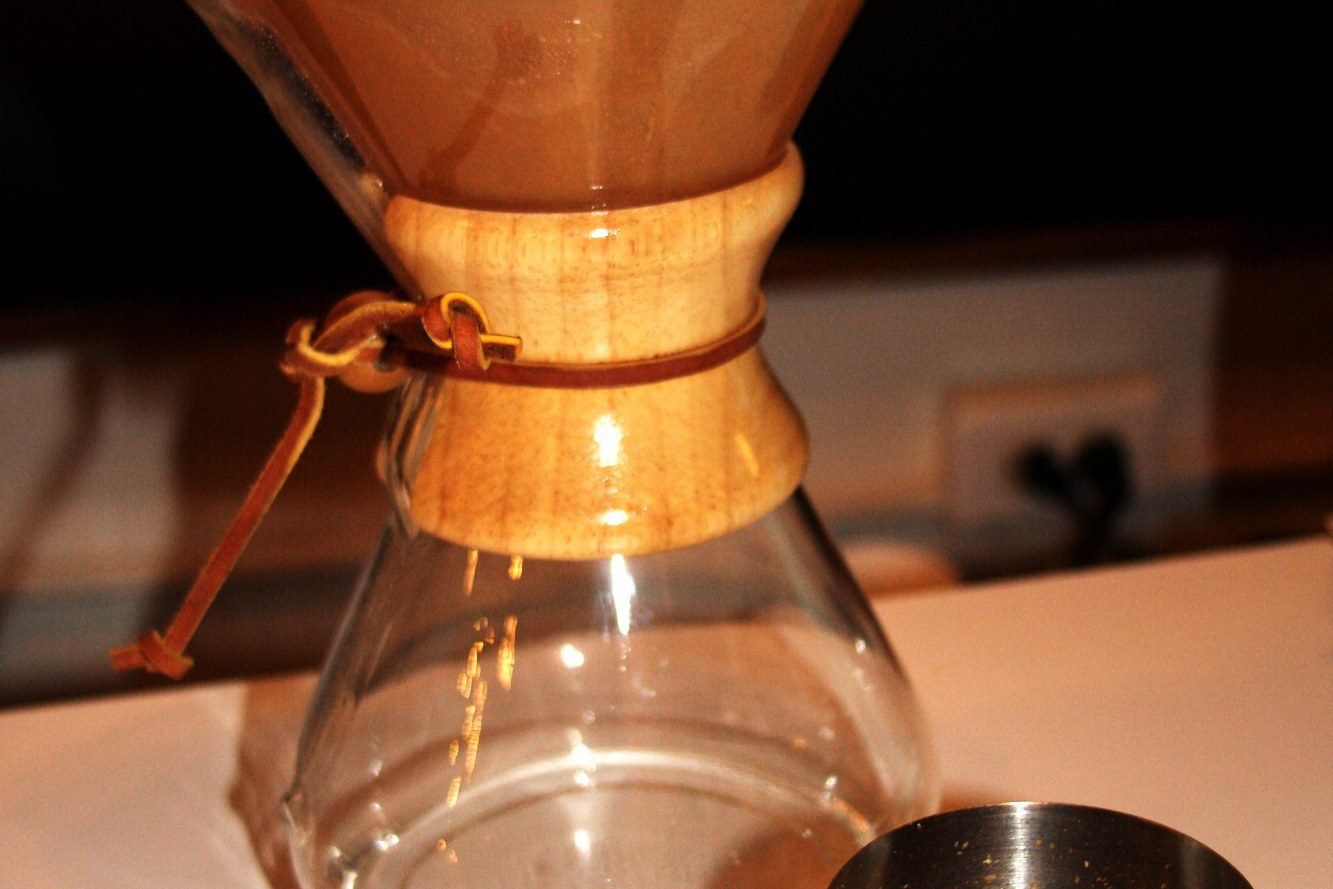
Pour-over. Cheap to begin with: a kettle, a filter cone and paper filters can cost under £30 in total. A cone with a drip-stop, such as a Clever Dripper, is the most forgiving for beginners. A Chemex gives a cleaner cup but is harder to control.
French press. Very approachable, but unforgiving if the grind is uneven, because there is no paper filter to catch fine particles. Grind a little coarser than for drip coffee and pour the brew off straight away. Coffee left sitting on the grounds keeps extracting, even with the plunger down, and turns bitter within minutes.
Want to taste it done properly?
The fastest way to learn what good coffee tastes like is to try several great ones side by side. Our Westminster Coffee Crawl and City of London Coffee Crawl are built for that. Read how a London coffee crawl works first if you’re curious.