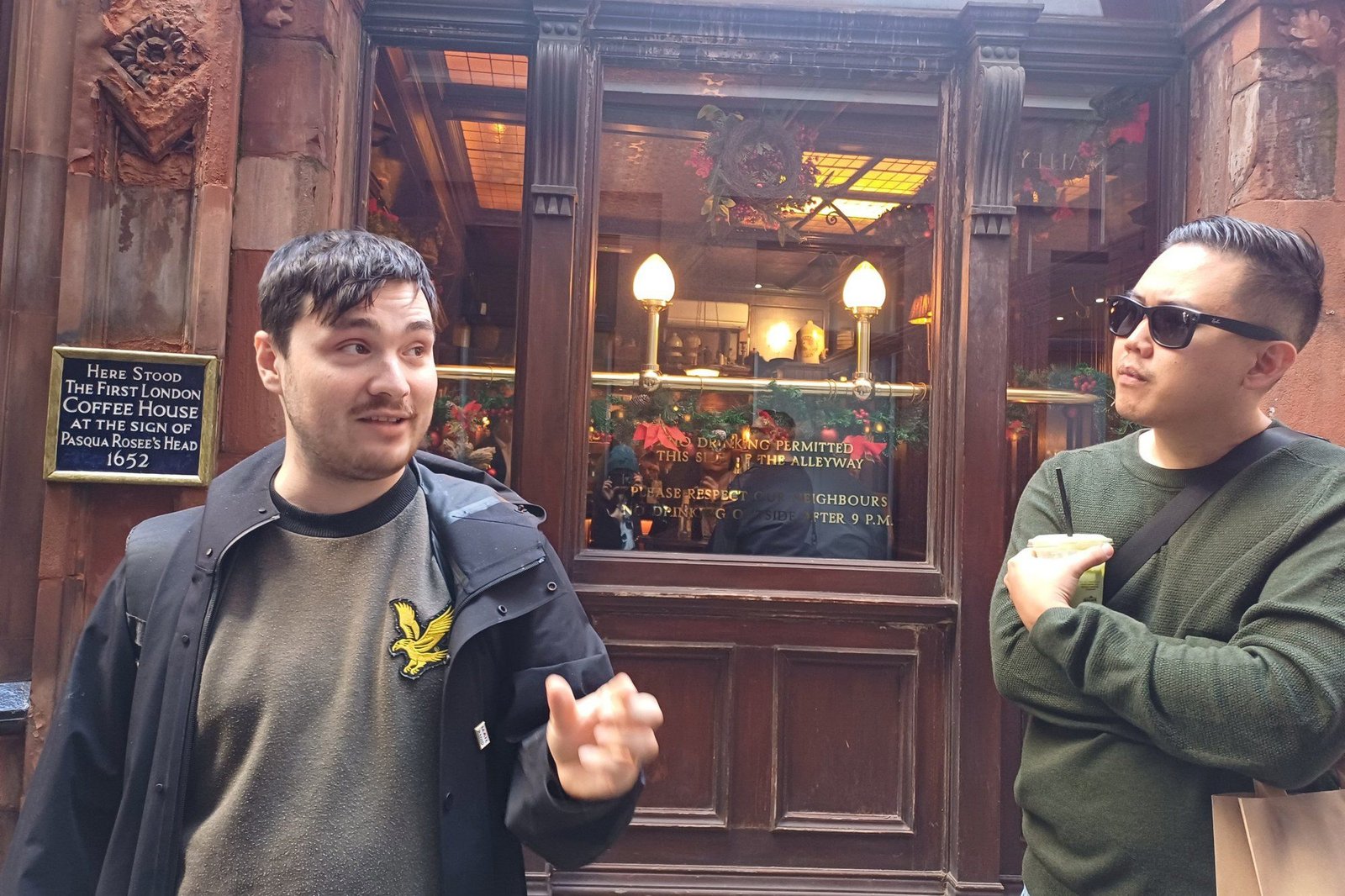
Most accounts of London’s coffeehouses stay with the big idea. This one stays with the places: the handful of addresses in the City where a pot of coffee turned into an insurance market, a stock exchange and, for a few days in 1675, a royal problem. For the wider story of how coffee shaped the city, start with our overview, How Coffee Helped Build London.
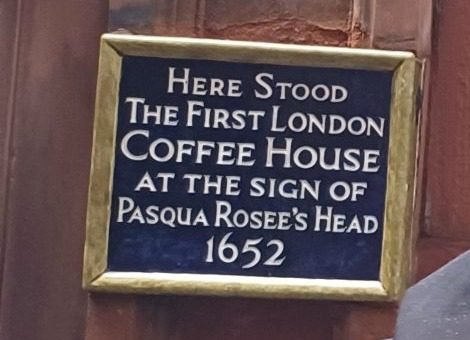
Stop 1: St Michael’s Alley, 1652
The first London coffeehouse opened in St Michael’s Alley, off Cornhill, run by Pasqua Rosée. Coffee had come a long way to reach it: a wild plant in Ethiopia, carried to Arabia where its cultivation was guarded for centuries, then into Europe through trade by the 1600s. Oxford had already opened England’s first coffeehouse earlier the same year, so London was catching up.
Stop 2: Lombard Street and the insurers
Ship owners and insurers met at Edward Lloyd’s coffeehouse on Lombard Street, an origin story that eventually became Lloyd’s of London. The meeting place came first; the institution grew out of it.
Stop 3: Jonathan’s Coffee House, 1698
Stockbrokers working out of Jonathan’s Coffee House set share and commodity prices from 1698, a trade that grew into the London Stock Exchange. Much of the City’s financial machinery began as a table, a pot of coffee and someone willing to write down a price.
Why a penny bought so much
These rooms were called penny universities because a cup of coffee cost a penny and the entry was effectively the same. For that you got a seat, a hot drink and the talk of the room: merchants, writers, scientists and politicians all argued in the same place, and anyone could listen in. Unlike a tavern, the drink kept heads clear, so the conversation was the point.
The king who tried to shut them
The coffeehouse was also a place to complain about the government, which Charles II noticed. In 1675 he tried to close them down, and public anger forced him to back down within days. By 1739 London had more than 550 coffeehouses.
Walk it with a coffee in hand
The streets around Cornhill, Lombard Street and the Royal Exchange are still where the City does its business, and the coffee is considerably better than a penny’s worth. Our City of London Coffee Crawl takes small groups through the square mile with a coffee in hand, and our Westminster Coffee Crawl covers the other side of town. To see what a crawl involves first, read what happens on a London coffee crawl.